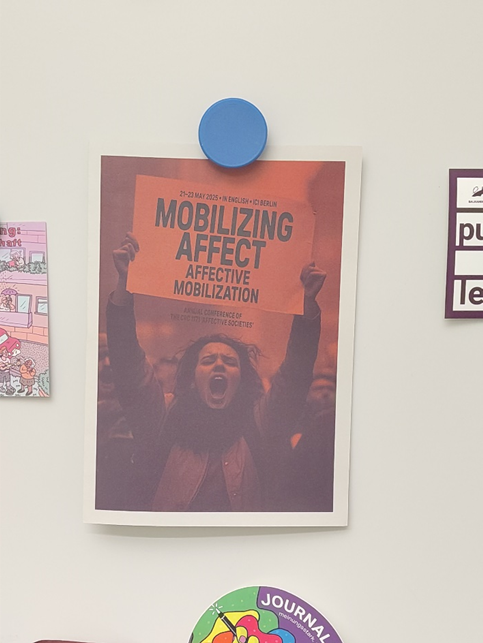

When the Collaborative Research Center “Affective Societies” hosted its annual conference “Mobilizing Affect – Affective Mobilization” in May 2025, together with the TU Dresden research project “Image Protests on Social Media” and ICI Berlin, the idea was simple: to ask what moves us, and how affect itself moves. Across three days, scholars, artists, and activists came together to explore how affects and emotions drive social and political action, how they sustain movements, and how they are mobilized across the political spectrum from emancipatory protest to authoritarian backlash. In times of proliferating crises and intensifying struggles over inequality, identity, and basic human rights, affect has become both a force of solidarity and a terrain of contestation. What unfolded during the conference—through talks, workshops, walking sessions, performances, and informal conversations—was a bodily experience of what it means to think with and through affect. Here, the organizing team and several participants look back at the conference and share reflections on what stayed with them.
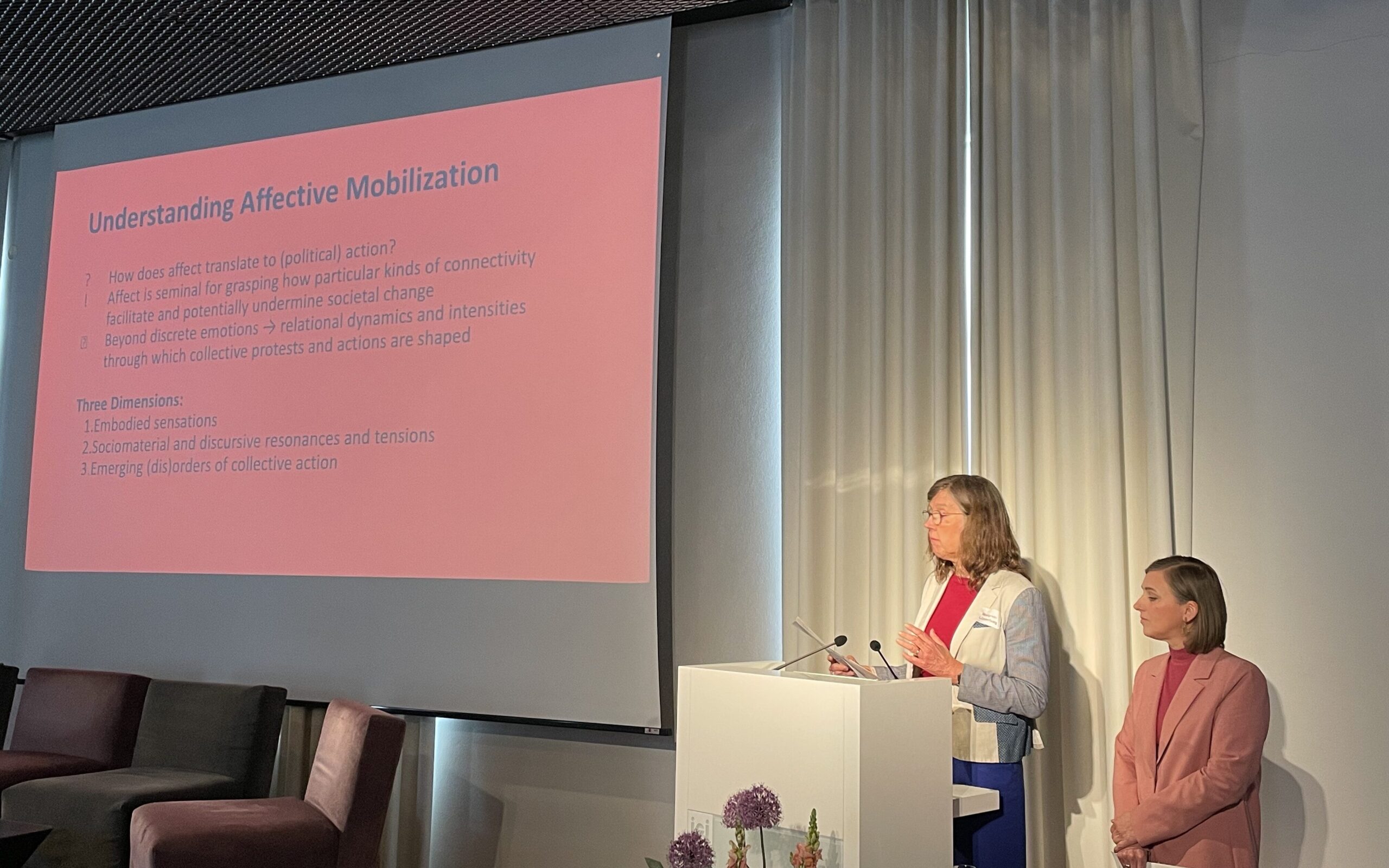
Bringing together the CRC “Affective Societies” at FU Berlin and the research project “Image Protests on Social Media” at TU Dresden felt energizing from the start, especially because both projects circle around the same big question of how affects and emotions “mobilize” people in our contemporary societies, whether on the streets or through images, memes, videos, or texts online. Early on, we had the sense that this question can only be fully explored in an interdisciplinary setting where academics, artists, and activists share their perspectives and might even challenge each other’s assumptions.
Over the days of the conference, in all the conversations, walks, workshops, bodily practices, and the many improvised moments in between, this really proved true to us in a very concrete way. Looking back, we’re struck by how much these encounters opened up our own thinking about affect and political mobilization and how good it felt to be reminded that “thinking” can take on different forms, sometimes even beyond words.
These reflections come from Margreth Lünenborg, Kerstin Schankweiler, and Verena Straub, who conceived and curated the conference. Lünenborg, Professor of Media and Communication Studies at Freie Universität Berlin, is a principal investigator at the CRC, where she examines how journalism and digital media shape affective publics and feminist counterpublics. Schankweiler, Professor of Visual Studies in the Global Context at TU Dresden, leads the project “Image Protests on Social Media,” investigating digital image cultures of activism and affective witnessing. Straub, art and image historian at TU Dresden and co-founder of the Affect and Colonialism Web Lab, explores memes and other popular visual practices as forms of political agitation. Together, they designed the conference as an interdisciplinary encounter between academia, art, and activism, building on their shared research into the affective dynamics of visual and digital protest.
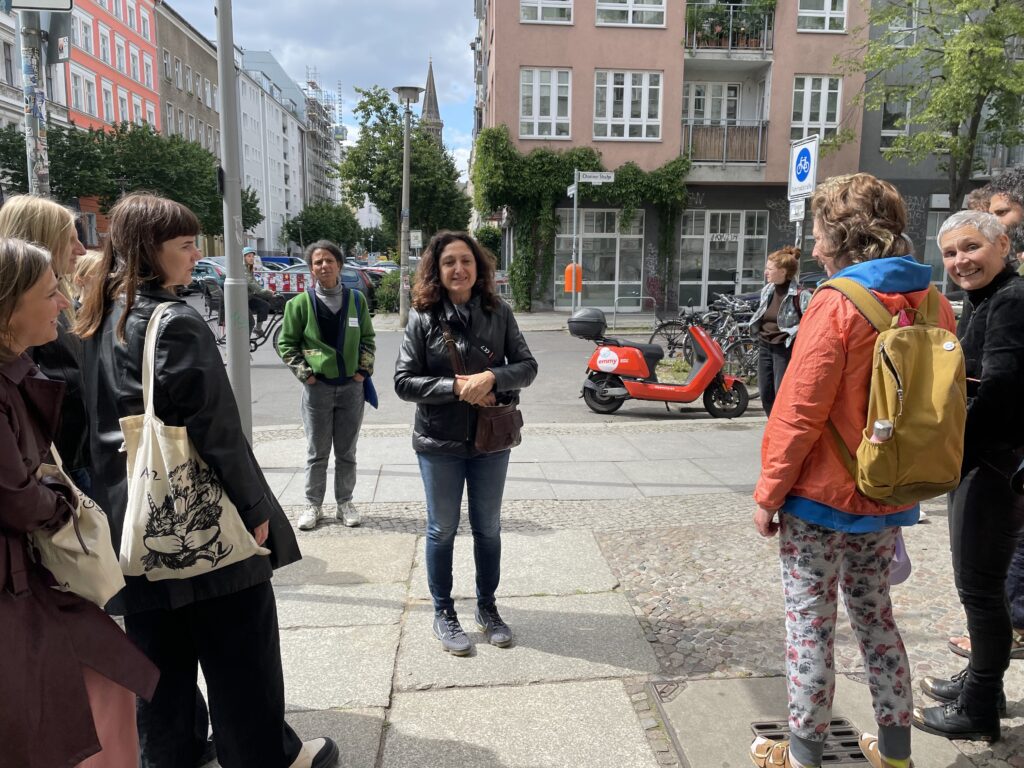
A sense of embodiment was central to a number of activities and workshops at the conference. Marina Guzzo, an artist, researcher, and fellow at the CRC, works at the intersection of body, landscape, and social transformation. In her workshop “Performative Rest Assembly,” she invited participants to explore how rest itself can become an act of resistance against exhaustion, acceleration, and ecological collapse.
I left the conference convinced that the humanities, social sciences, and political sciences must be reclaimed through embodied and affective practices. What marked me most were not only the panels, but the workshops, the collective walk, the shared moments of talks, and the ways in which we learned to read living archives/landscapes of memory and relation. These experiences revealed how knowledge is produced not only through discourse, but through the intensities that move between bodies and environments.
To produce situated knowledge, we must attend to these affective circulations: how bodies are touched, constrained, or energized by territories; how collective movement modulates thought; how histories linger as sensations. Research becomes accountable to place when we allow analysis to be altered by what the territory affects in us. To produce change is to be able to look at affects as the forces it releases, the resonances it provokes (or not), the limits it exposes.
If such embodied and affective practices are not on our agenda—if we exclude workshops, walks, rests, and landscape-based inquiry—we risk reproducing a disembodied, extractive, and politically insufficient model of knowledge. I hope the conversations we began here translate into protocols, funding priorities, and evaluation criteria that recognize affective and embodied methodologies as rigorous, not ornamental. Because violence continues to affect the world through our bodies (of course some more than others), everyday.
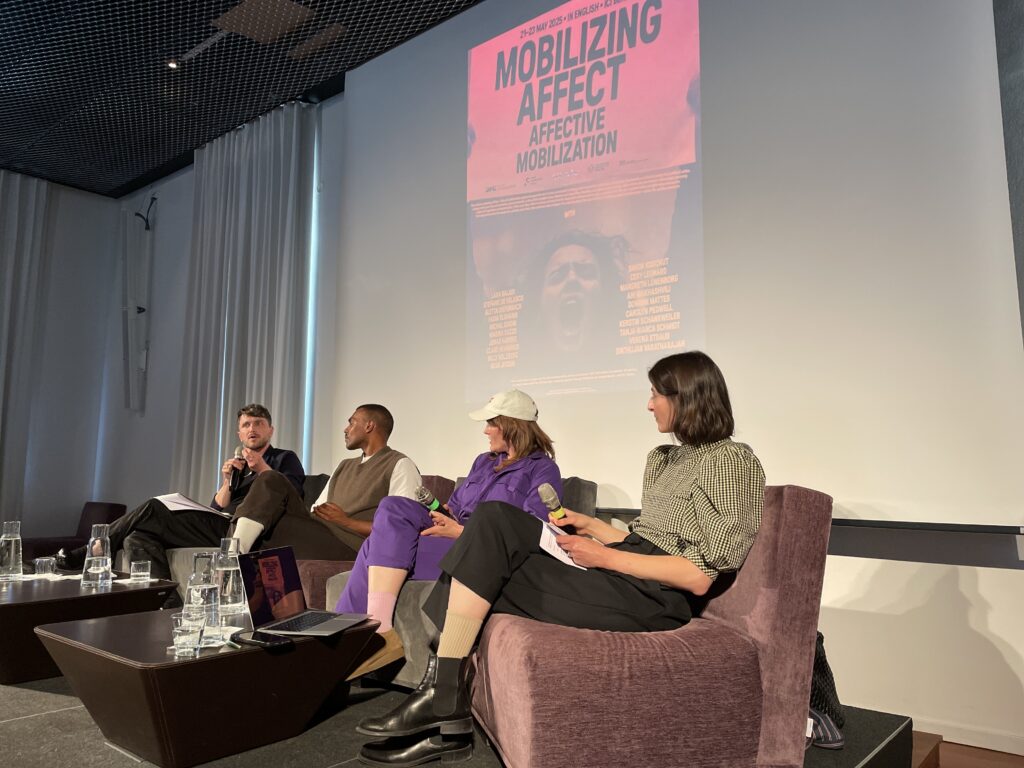
Billy Holzberg, Lecturer in Social Justice at King’s College London, contributed to the panel “Mobilizing Affect: Entanglements across Academia, Arts, and Activism.” In his contribution he examines how affective attachments and sexual desire fuel contemporary nationalisms, border regimes, and late-fascist politics. Looking back, Holzberg returns to one emotion that surfaced repeatedly throughout the discussions, and resonated in the sounds shared by each panelist, namely, horror.
An emotion that stood out from the panel was the experience of horror. From Javier Milei swinging a chainsaw, to Wutbürger shouting in anger, and the screaming of victims of the Tamil genocide, horror was a key emotion produced by the sounds we played. I think of horror as more than fear, as an affect emerging in response to something incomprehensible, acts that confound understanding and lead to panic, revulsion and a sense of impotence. I also think that horror is an emotion that festers within an increasingly violent and authoritarian present. Whether it’s the current genocide in Palestine, the destruction brought about by climate collapse, or people being killed at the border of Europe, images, sounds and words of horror are moving to the centre of social and political analysis.
The question that the presence of horror also raises for me is what the work of the social critique is in this political moment. For a long time, critical sociology has operated within a ‘hermeneutics of suspicion’ so in the mission of revealing the violence, injustice or incoherence that lies behind seemingly innocent or even emancipatory social practices and structures. In the contemporary moment, however, violence is often shown, not hidden. Ideology is declared rather than disguised. And the quiet part is increasingly said out loud. An epistemology based on exposing the violence of hidden power dynamics seems increasingly futile in this context. As such, I see the need for more reparative modes of writing and thinking that not only point out the horror that takes place but also envision ways to mend it. Only if we build politically and emotionally salient responses to this horror might we be able to avert more horror to come.
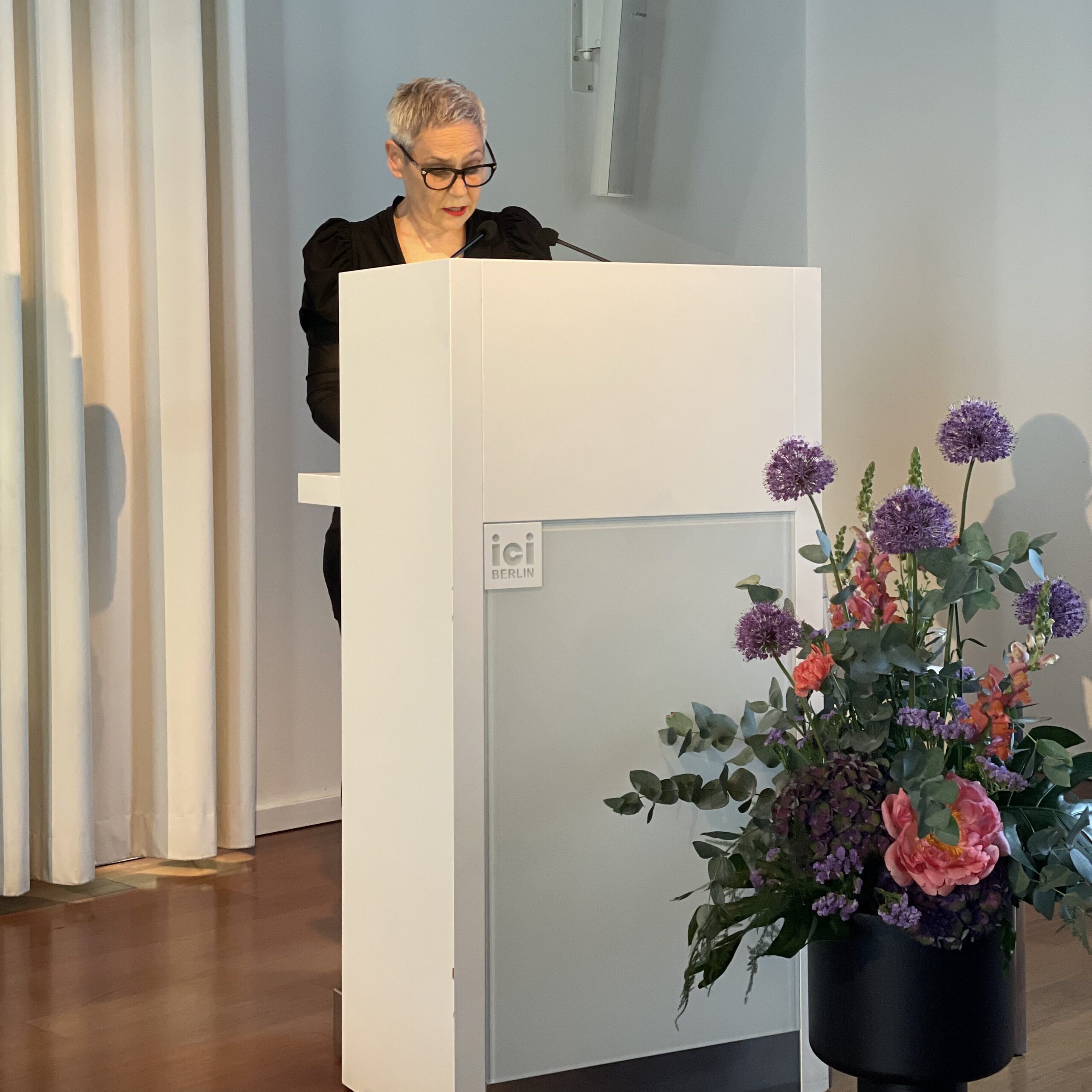
Clare Hemmings, Professor of Feminist Theory at the London School of Economics, opened the conference with her keynote “From ‘Affective Dissonance’ to ‘Affective Solidarity’: The Politics of Affect and the Rise of the Far Right.” Building on her long-standing work on feminist and queer theories and histories, her lecture inquired how affect theory might help us navigate the present rise of authoritarianism and the challenge of creating solidarities across difference. A few months later, Hemmings revisits the tensions that emerged around the question of Palestine, a topic that charged the conference with both emotional and political intensity.
How to think with and through affect in these grim times? How to flag the importance of affect theory to help us make sense of global right-wing shifts and challenges to rights of all kinds, without lapsing into abstraction or retreating into personal feelings? That was the invitation for the conference, and perhaps the significance of that challenge was nowhere more evident than in how we navigated the question of Palestine.
In my own paper, I wondered about the power of affect to explain or transform social conditions that allow for an ongoing genocide in Palestine. I reflected on the importance of affective dissonance and solidarity as feminist standpoint strategies for centring struggle at the heart of epistemological ethics. I was asked in the Q&A how my understanding of affect could account for the horror of the Israeli hostages. I was naively shocked at the question, which for me recentres Israeli life as more significant than Palestinian life, in a moment where the violence in Gaza is obliterative and indiscriminate. And I struggled to respond adequately, knowing as I do that the UK’s history of both Islamaphobia and Anti-Semitism are historical legacies I cannot throw off my own shoulders.
An Israeli speaker the next day who centred the irony of media and activist focus on hostages while paying no attention to Palestinian death – a paper that was deeply moving, but which also risked repeating the same displacement – was attacked by a journalist in the Q&A, and accused of anti-Semitic use of the term genocide. The speaker was firm in her commitment to a Free Palestine, but backtracked on the question of genocide, reframing it as a ‘genocidal war’. There were no other papers on affect and Palestine, and the encounter risked being instantiated as the central affective exchange of the conference’s response to the current genocide. Yet those of us on the scheduled walk through Berlin were encouraged to reflect on violence and affect, frequently invoking Palestine, and for me this was a generative and significant space. It allowed affect to course through our bodies in real time, and allowed connections to the complex histories of military and state violence we witnessed together to be tenuously threaded together. Perhaps this is where the potential abstraction of affect theory can be put to material use: in collectivity, in our bodies, in the artistic practice of the ambulatory hosts, and in our refusals to stay quiet in the face of an ongoing genocide.
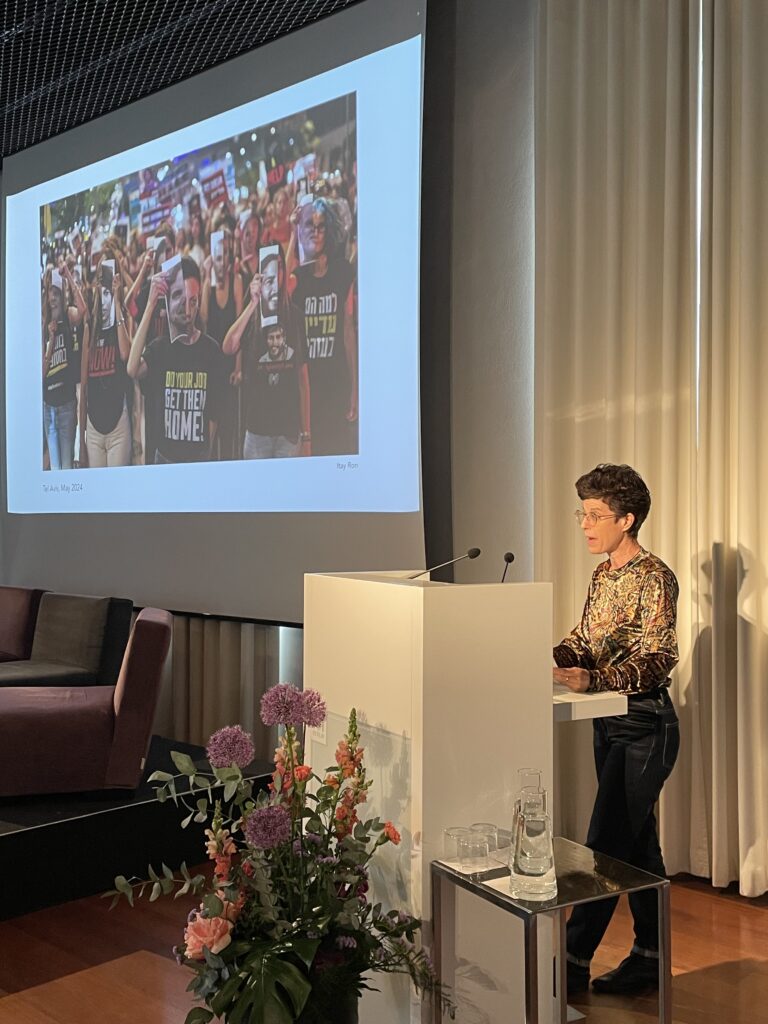
Michal Givoni, political theorist and Humboldt Fellow at the CRC, examined in her paper “Protest of the Captive Heart: Mobilizing Desperation” how Israel’s liberal protest movements mobilize affects of hope and desperation; and how such affects can also enable political blindness. Her reflection turns to a question raised after her talk: what can academic intervention look like in the cruel times we are living in?
One thought that has stayed with me in the weeks following the annual conference is related to the interface of thought and action that scholars in my field have come to regard as a professional imperative. After my presentation—which addressed the desperate protests of Israel’s liberal public and the ways in which their intense mobilization of affects contributes to the disavowal of Israel’s genocidal war in Gaza—I was asked what I thought scholarly intervention could look like in these dark times.
In my response, I spoke about the possibility and the obligation to use our institutional privileges to protect our students’ freedom of speech. I noted that I have come to view this course of action as an alternative to public outreach and to the relentless production of “content” that has become such a central part of academic work. My last book is devoted to the obstructed, or “diminished,” affectivities that flourish under what has been called “the slow cancellation of the future,” and non-intervention—refusal, withdrawal, retreat, or simply modesty and taking time to think—strikes me as an important and underappreciated position. The binary of speaking out versus doing nothing—which strongly fuels our urge to intervene, or rather to intervene in particular ways—is not only false but also unhelpful in the face of live-streamed genocide, techno-fascism, and emerging eco-apartheid.
Sometimes the right thing to do is to leave space for those most severely affected and most systematically marginalized, so that they can undertake their own interventions. Sometimes it is wise to consider what we may be sanctioning or normalizing when we address a supposedly critical public that, as Daniel Warner has observed, comes into being by virtue of being addressed. And sometimes we simply need time to grieve and to take account of what has been lost and of what remains useful. Intervention is currently flourishing, but perhaps it could also benefit from a measure of disarray—if only as a way of signaling that the power of critical speech should not be turned into a catechism.
Across these reflections runs a shared insight: affective mobilization is not only what we study, it is also what we do. The conference became a space where affects circulated between thought and movement, grief and hope, silence and speech. To study affect today means to remain attuned to these frictions: between exposure and repair, analysis and embodiment, solidarity and dissonance. As the reflections remind us, affects mobilize, but they also unsettle, pause, and reorient us. In this sense, the conference did not simply analyze affective mobilization; but aimed at embodying it through dialogue, conflict, walking, resting, and being moved together.
For more insights, some recordings, and all presentation abstracts, visit the conference page at ICI Berlin.